
Think about the last time you laughed at a funny video, got lost in a great movie, cheered for your favorite sports team, or jammed out to a new song. That’s entertainment and it’s one of the most powerful forces shaping everyday life in 2026.
Whether you’re scrolling through short clips on your phone, heading out to a gaming entertainment center with friends, or binge-watching a hit series on a streaming platform, entertainment surrounds us every single day. And it’s now a multi-trillion-dollar global industry.
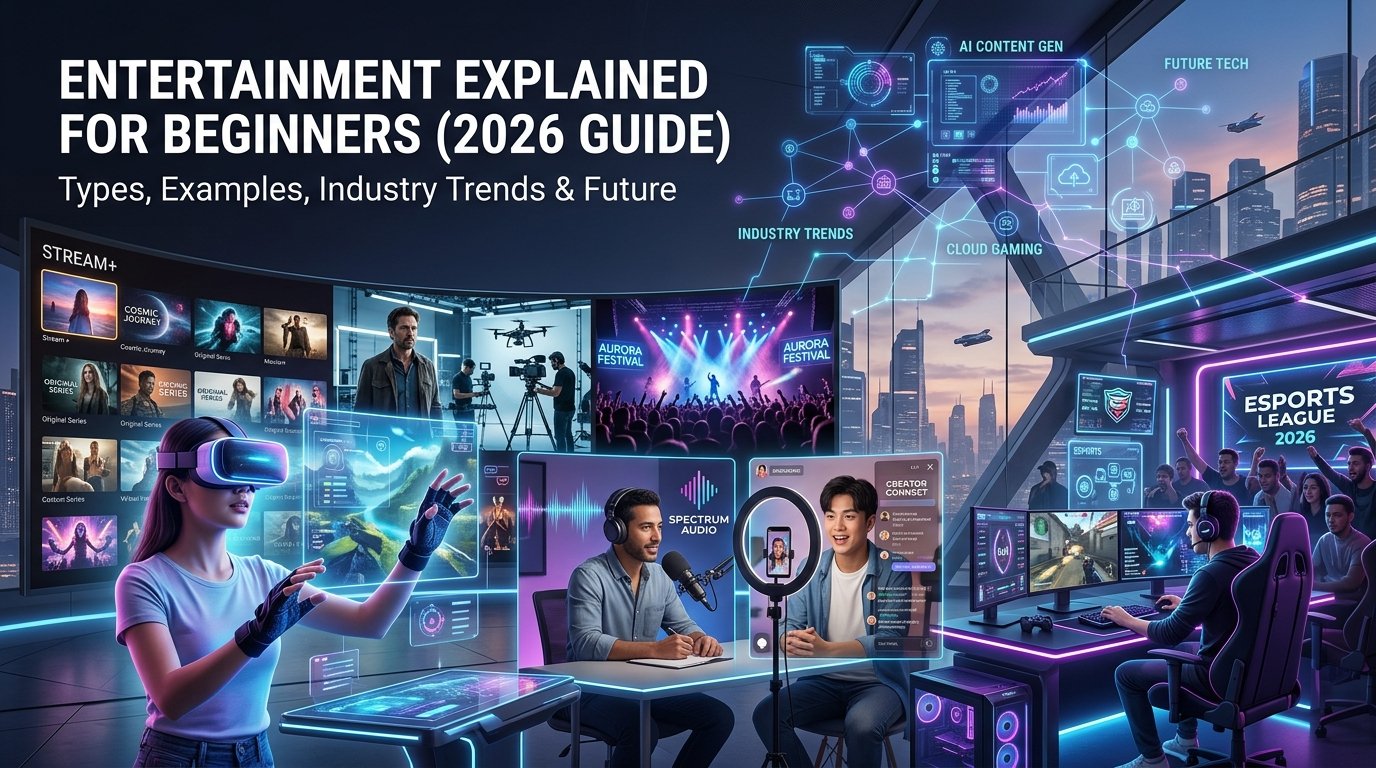
In this guide, you’ll get a complete, beginner-friendly breakdown of what entertainment really means, the biggest types and categories, how entertainment companies make money, and what the future looks like in a world shaped by AI and big time entertainment brands.
The global entertainment and media market is projected to exceed $2.8 trillion by 2026 (PwC Global Entertainment & Media Outlook). Keep reading to understand exactly how this massive industry works.
What Is Entertainment?
Simple Definition
Entertainment is any activity, content, or experience that captures your attention and gives you enjoyment, pleasure, or excitement. It doesn’t have to be big or expensive watching a YouTube video counts, and so does attending a sold-out stadium concert.
In simple terms: entertainment is any content or experience that engages and delights an audience. It can be passive (watching a film) or active (playing a video game).
Why People Seek Entertainment
Humans are wired to seek out entertainment. It’s not just fun, it’s a core psychological need. Here’s why people turn to entertainment every day:
• Stress relief : a good show or playlist melts the tension away
• Boredom : entertainment fills downtime with something stimulating
• Social connection : watching sports or movies creates shared experiences
• Escapism : stories let us live in different worlds temporarily
• Learning : documentaries, educational apps, and podcasts inform while entertaining
Entertainment vs. Education
These two often overlap. Think of a nature documentary on Netflix, it’s entertaining AND educational. The term “edutainment” (education + entertainment) has grown massively, especially with platforms like YouTube, Duolingo, and interactive apps blending learning with fun.
However, pure entertainment’s primary goal is enjoyment, not instruction. That distinction matters when we look at how content is created and marketed.
History of Entertainment
Ancient Entertainment
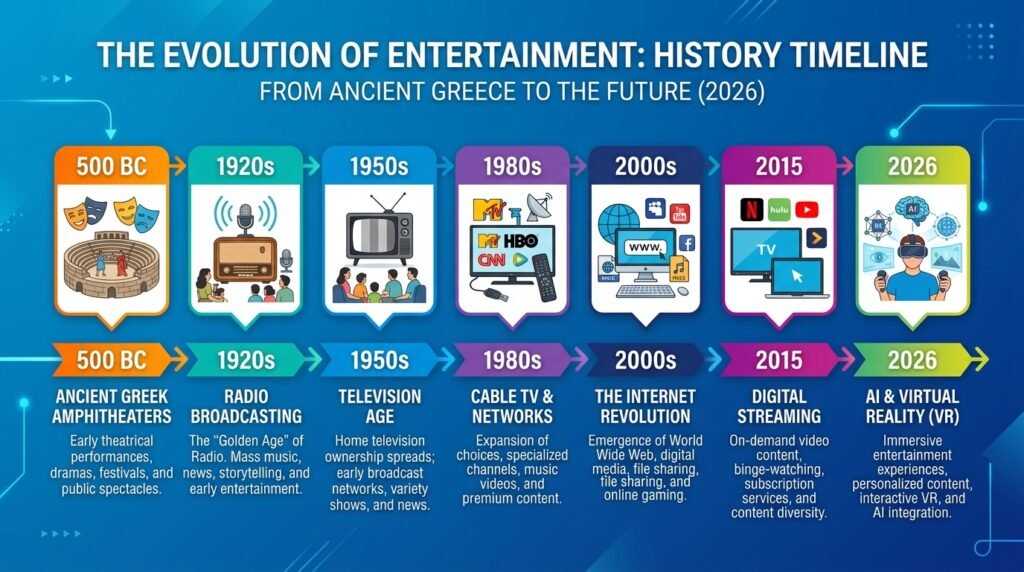
Entertainment is as old as humanity itself. Ancient Greeks built grand amphitheaters for plays and poetry competitions. Romans packed the Colosseum for gladiatorial games. Indigenous communities gathered around fires for storytelling and music. Across every civilization, humans found ways to entertain themselves and each other.
Radio and Television Era
The 20th century brought entertainment into the home for the first time. Radio in the 1920s–1940s brought music, drama, and news to millions. Then TV arrived in the 1950s and completely rewired how families spent their evenings. Iconic brands like NBC, CBS, and BBC became cultural powerhouses. By the 1980s and ’90s, cable TV, VHS, and blockbuster movies had turned entertainment into a true global industry.
Internet Revolution
The internet changed everything. Suddenly, anyone could upload content. YouTube launched in 2005. iTunes let you buy a single song for a dollar. Online gaming went multiplayer and global. Entertainment was no longer just something you received , it became something you participated in.
Streaming Era
Since the 2010s, streaming has dominated. Netflix, Spotify, and later Disney+, HBO Max, and Apple TV+ have replaced traditional TV for millions of households. Today, the average person consumes entertainment across 4–5 different digital platforms. And in 2026, the streaming wars are still evolving, with bundling, live sports streaming, and AI-personalized feeds reshaping the landscape.
Types of Entertainment
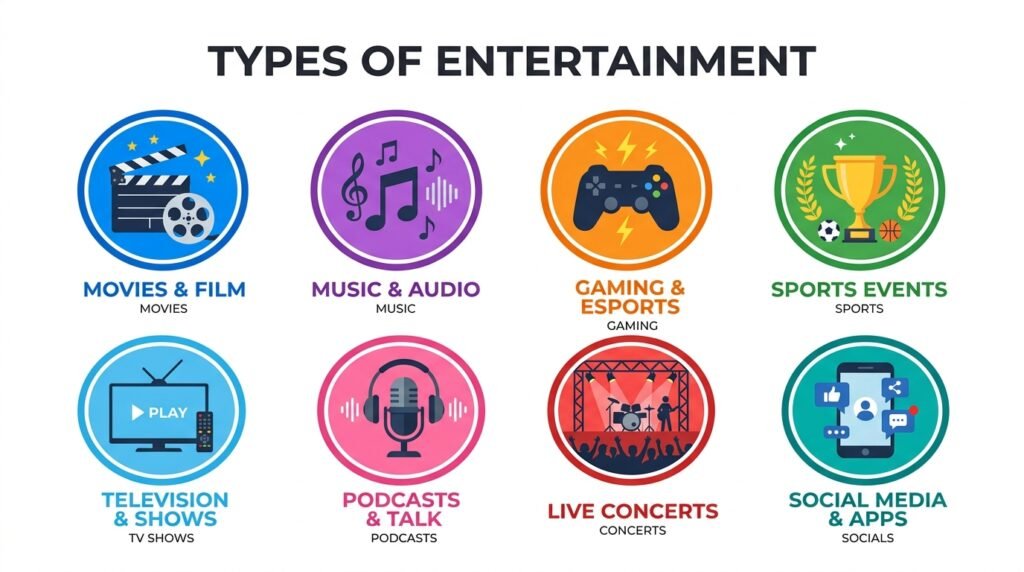
Entertainment comes in many shapes and sizes. Here’s a breakdown of the major types, complete with real-world examples you already know.
Movies
Film remains one of the most universally loved forms of entertainment. From Hollywood blockbusters to indie gems, entertaining movies generate billions each year. Think of franchises like Marvel, Star Wars, and Fast & Furious that keep audiences coming back.
With streaming platforms, you no longer need a cinema , day-and-date releases mean major films now debut on Disney+ or Netflix the same day they hit theaters.
Television
TV has gone through a golden age. From prestige dramas like Breaking Bad and Succession to reality hits and talk shows, television offers something for every audience. The rise of streaming-native TV (series made for Netflix, HBO Max, Amazon Prime) has blurred the line between “movie” and “series.”
Music
Music is everywhere in your earbuds, in coffee shops, in cars, in gyms. Streaming platforms like Spotify and Apple Music have made virtually all of human music history available on demand. In 2026, artists also monetize through TikTok virality, sync licensing (music in ads and films), and live tours. Big time entertainment labels like Universal Music Group, Sony Music, and Warner Music dominate the industry.
Gaming
Gaming is no longer a niche hobby it’s one of the most profitable entertainment categories on Earth. With over 3 billion gamers globally, gaming now rivals film and music combined.
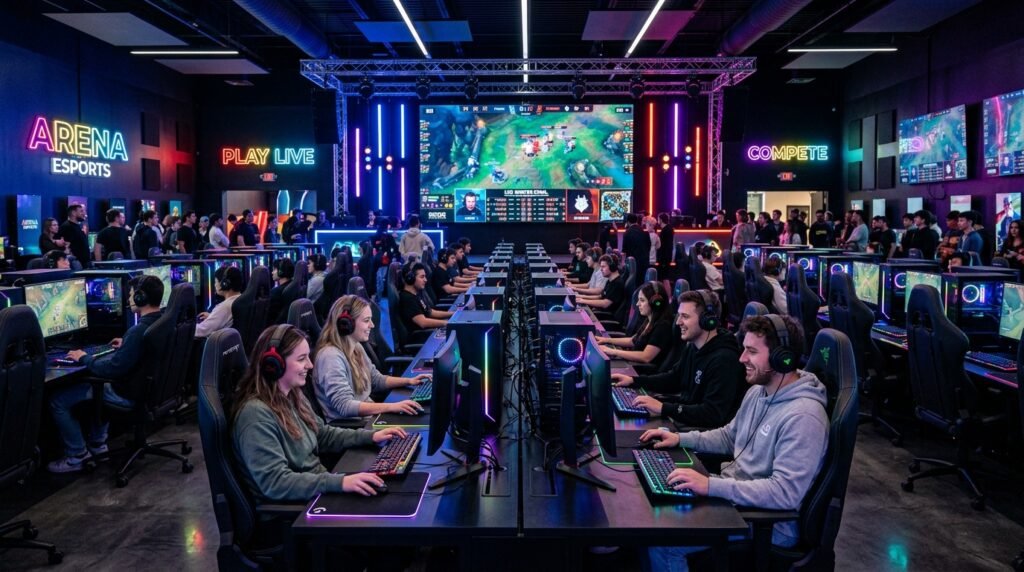
From console gaming (PlayStation, Xbox) to mobile games and massive PC titles like Fortnite and League of Legends, the gaming world is enormous. Gaming entertainment centers, physical arcades and competitive gaming venues, are also booming in cities worldwide, giving players a social, out-of-home experience.
Sports
Sports entertainment generates massive global revenues through broadcast rights, sponsorships, merchandise, and live events. The NFL, NBA, Premier League, and IPL are more than competitions , they’re media empires. In 2026, live sports streaming rights are the most hotly contested asset in all of entertainment, with Amazon, Apple, and Netflix all competing for deals.
Social Media Content
This is arguably the most consumed entertainment in 2026. From TikTok and Instagram Reels to YouTube Shorts and Snapchat Stories, billions of people watch short-form content every day. It’s entertainment apps at their most accessible, no subscription needed, endlessly personalized by algorithm.
Podcasts
Podcasts have exploded into a mainstream format. From true crime to business interviews to comedy shows, there are over 5 million podcasts globally. Spotify, Apple Podcasts, and Amazon Music anchor the space. Big names like Joe Rogan, Conan O’Brien, and Brené Brown attract millions of listeners per episode.
Live Events
Live events, concerts, festivals, sports matches, stand-up comedy shows, and theater , create experiences you can’t replicate at home. Post-pandemic, live entertainment is booming again. The live music industry hit record revenues in 2023–2024, and 2026 is continuing that trend with mega-tours and festival culture going global.
Digital Entertainment in 2026
The digital revolution has transformed how we create, distribute, and consume entertainment. Here’s what’s defining the entertainment landscape right now, drawing on insights from Deloitte’s Digital Media Trends and EY’s Global Entertainment & Media Outlook.
Streaming Platforms
Streaming is the new cable ; but it’s also becoming more like cable again. After years of fragmentation, the industry is moving toward bundling. Disney+, Hulu, and ESPN+ bundle together. Apple TV+ is embedded in Apple One. Deloitte’s 2025 Digital Media Trends report noted that streaming fatigue is real: over 40% of subscribers have cancelled at least one streaming service in the past year due to cost and content overload.
The response? Live content. Platforms are investing heavily in live sports and events to drive subscriptions and reduce churn.
Short-Form Video
TikTok and YouTube Shorts have fundamentally changed content consumption. The average video is under 60 seconds. Short-form video is now the #1 entertainment activity for users under 25, and it’s increasingly popular with older demographics too.
Entertainment companies are adapting ; movie studios release trailers as TikTok content. Musicians break new songs via short clips. Sports leagues create highlight reels optimized for Reels and Shorts.
Creator Economy
The creator economy is one of the biggest shifts in entertainment history. In 2026, there are over 200 million content creators globally (Goldman Sachs estimate), from mega-influencers to small niche YouTube channels. Platforms like YouTube, Substack, Patreon, and OnlyFans let creators earn directly from their audiences.
This has disrupted traditional entertainment companies. A single creator with a loyal audience of 1 million can generate more revenue than a mid-size TV show. Entertainment companies are now acquiring creators, signing them to exclusive deals, and building talent networks.
AI-Generated Content
Artificial intelligence is transforming entertainment in ways we’re just beginning to understand. AI tools now assist with script writing, music composition, video editing, and even acting (via AI-generated likenesses). EY’s 2025 Media & Entertainment Report highlighted that studios using AI in post-production cut editing costs by up to 30%.
But AI is also sparking debates. Hollywood unions have negotiated AI protections. Fans debate the authenticity of AI-assisted music. The technology is powerful, but the industry is still figuring out the ethical and creative boundaries.
Virtual Reality Entertainment
VR entertainment is finally finding its audience. With Apple Vision Pro, Meta Quest 3, and PlayStation VR2 on the market, immersive entertainment is more accessible than ever. VR concerts, virtual theme parks, and interactive storytelling experiences are growing. Industry analysts (Deloitte, PwC) project VR entertainment to grow at 25%+ CAGR through 2028.
Why Entertainment Is Important
Stress Relief
Science backs this up: entertainment activates the brain’s reward system, releasing dopamine and reducing cortisol (the stress hormone). After a long work week, watching your favorite show isn’t lazy , it’s recovery. Music in particular has powerful mood-regulation effects, which is why entertainment apps like Spotify build mood-based playlists.
Education
From Khan Academy videos to Netflix documentaries to educational podcasts, entertainment has become a primary vehicle for learning. Edutainment platforms blend engaging visuals, storytelling, and interactivity to make complex topics accessible. Even video games teach problem-solving, history, and teamwork.
Cultural Connection
Entertainment is how cultures express and share themselves. Films, music, and stories carry values, histories, and languages across generations and borders. K-pop became a global phenomenon. Hollywood exports American culture worldwide. Bollywood is the world’s largest film industry by output. Entertainment is soft power.
Economic Contribution
The entertainment industry is an economic giant. In the US alone, the arts and entertainment sector contributes over $1 trillion to GDP annually. It employs millions , from actors and musicians to software engineers and ad sales teams. The ripple effects extend to tourism, hospitality, retail, and technology.
Biggest Entertainment Industries
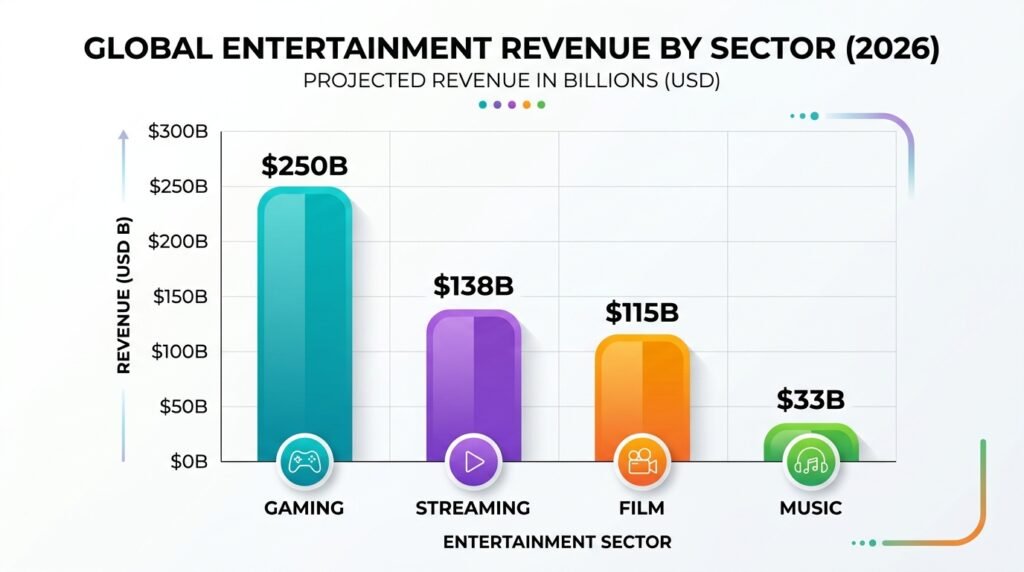
Let’s look at the scale of each major entertainment sector with current data (PwC, Statista, Newzoo 2025–2026 estimates):
Film Industry
Global revenue: approximately $105–$115 billion. Hollywood remains the center of global film, but it’s no longer alone. South Korea (Parasite, Squid Game), India (Bollywood and South Indian cinema), and Nigeria (Nollywood) all produce global hits. The global box office is recovering post-pandemic with franchise films driving ticket sales, while streaming-exclusive films attract award attention.
Music Industry
Global revenue: approximately $29–$33 billion. Recorded music revenue is growing again after years of decline, thanks to streaming. Spotify reports over 600 million users. Live music is at historic highs, with Taylor Swift’s Eras Tour reportedly generating over $1 billion , the first tour in history to do so. Big time entertainment conglomerates like Live Nation manage both artist management and venue operations.
Gaming Industry
Global revenue: approximately $220–$250 billion. Gaming is the largest entertainment sector by revenue. Mobile gaming accounts for over 50% of total gaming revenue globally. Esports is a billion-dollar sub-industry. Gaming entertainment centers are growing in popularity as social, out-of-home destinations. Major players include Sony, Microsoft (Xbox + Activision), Nintendo, Tencent, and Epic Games.
Streaming Industry
Global revenue: approximately $115–$138 billion. Netflix leads globally with 300 million+ subscribers, but competition is fierce. Disney+, Amazon Prime Video, Apple TV+, HBO Max, and regional players all compete for attention. Ad-supported streaming tiers (AVOD) are growing rapidly, making streaming accessible to cost-conscious consumers while opening new ad revenue streams.
How Entertainment Makes Money
The entertainment industry uses multiple overlapping revenue models. Here’s the complete breakdown:
Advertising (Ads)
Traditional TV, YouTube, social media, and podcasts are largely ad-supported. Advertisers pay to reach audiences at scale. YouTube generated over $31 billion in ad revenue in 2023 alone. Meta (Facebook + Instagram) and TikTok also depend almost entirely on advertising. Even streaming platforms now use ads , Netflix’s ad-supported tier attracted millions of users in its first year.
Subscriptions
The subscription model transformed entertainment economics. Netflix at $15–22/month, Spotify at $10–16/month, Xbox Game Pass at $14–20/month , these recurring revenues give companies predictable income. The key metric: ARPU (Average Revenue Per User). Companies obsess over reducing churn and increasing ARPU through premium tiers, bundles, and family plans.
Sponsorships
Brands pay entertainment properties to associate with their audiences. This includes sponsoring sports teams (Manchester City’s Etihad naming rights), music festivals (Coachella and American Express), podcasts, and individual creators. Sponsorship is especially important for live events and the creator economy, where it often represents the majority of income.
Merchandise
Entertainment IP (intellectual property) is gold. Disney earns more from merchandise than from films. Gaming companies sell in-game cosmetics (skins, characters) that cost nothing to produce but generate billions. Sports teams sell jerseys, hats, and gear. Merchandise extends the entertainment relationship beyond the screen and into everyday life.
Live Events
Live experiences command premium pricing that digital can’t replicate. Concert tickets, sports season passes, festival wristbands, theater shows , these generate enormous revenue. Live Nation, the world’s largest live entertainment company, reported record revenues in 2024–2025. Gaming entertainment centers also fall here, charging entry fees and in-venue spending.
Future of Entertainment
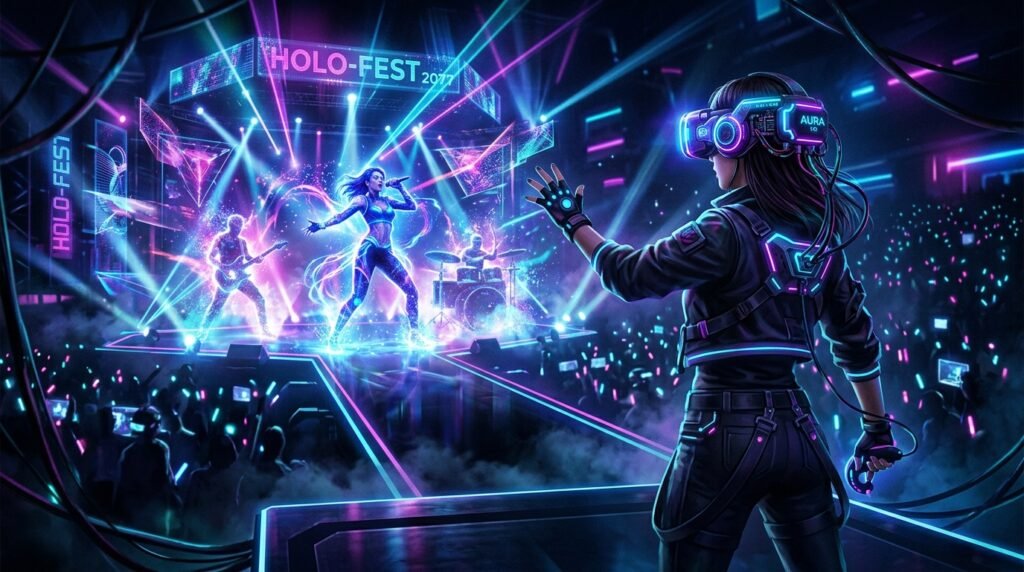
What does the next decade hold for entertainment? Based on current trends tracked by Deloitte, EY, PwC, and the World Economic Forum, here are the most exciting developments to watch.
AI Content Creation
AI will co-create, not replace, human artists. We’re moving toward a world where AI helps screenwriters generate plot options, assists musicians with chord progressions, and enables filmmakers to visualize scenes before production. The studios that master human-AI collaboration will lead the next decade. Expect AI characters, AI-voiced audiobooks, and AI-personalized story branches to become mainstream entertainment app features.
Interactive Storytelling
Netflix’s Bandersnatch was an early experiment in interactive film. The future goes much further: stories where the audience’s choices truly shape the narrative, blending gaming and cinema. Interactive storytelling combines the emotional depth of film with the agency of gaming. Expect this to expand significantly as game engines become accessible to non-game studios.
Metaverse Experiences
The metaverse hype of 2021–2022 cooled, but the underlying technology kept maturing. In 2026, virtual concerts (Roblox concerts drew 100M+ virtual attendees), digital fan zones, and virtual reality experiences are real business. The World Economic Forum identifies immersive digital environments as a key entertainment frontier, especially for younger Gen Z and Gen Alpha audiences.
Personalized Content
Personalization is already here , Netflix recommends shows, Spotify generates Discover Weekly, TikTok learns your preferences within hours. The future is hyper-personalization: AI that understands your emotional state, time of day, and context to deliver exactly the right content at the right moment. Some platforms are already experimenting with content that adapts its pacing and tone to viewer engagement data in real time.
Frequently Asked Questions (FAQs)
1. What is entertainment in simple words?
Entertainment is any activity or content , like watching a movie, listening to music, playing a game, or attending a live event , that keeps you engaged, amused, or gives you enjoyment. If it captures your attention and makes you feel good, it’s entertainment.
2. What are the main types of entertainment?
The main types of entertainment include movies, television, music, gaming, sports, social media content, podcasts, and live events. In 2026, digital entertainment (streaming, short-form video, and interactive content) has become central to daily life.
3. Why is entertainment important in daily life?
Entertainment matters because it reduces stress, connects communities, preserves culture, drives learning, and contributes trillions to the global economy. On a personal level, it gives us joy, helps us recover from stress, and keeps us connected to others.
4. How does the entertainment industry make money?
Entertainment companies earn through five main models: advertising (YouTube, social media), subscriptions (Netflix, Spotify), sponsorships (events, creators), merchandise (IP licensing), and live events (concerts, sports, gaming entertainment centers).
5. What is digital entertainment?
Digital entertainment refers to any content consumed through electronic devices and online platforms , streaming services, mobile games, social media, podcasts, and virtual reality experiences. It’s now the dominant form of entertainment globally.
6. What are examples of entertainment media?
Entertainment media includes Netflix (streaming), Spotify (music), YouTube (video), Fortnite (gaming), the NFL (sports broadcasts), TikTok (short-form video), and Roblox (virtual experiences). Entertainment apps like these serve billions of users worldwide.
7. How is AI changing entertainment?
AI is transforming entertainment in multiple ways: it helps create scripts, compose music, and generate visuals; it powers personalization algorithms on Netflix and Spotify; and it’s enabling new interactive formats where stories adapt in real time based on viewer choices.
8. What is the future of entertainment?
The future of entertainment is personalized, interactive, and immersive. AI-generated content, metaverse experiences, interactive storytelling, and hyper-personalized feeds will define the next decade. Big time entertainment companies and independent creators alike are investing heavily in these trends.
Wrapping Up
Entertainment is one of the most universal human experiences and in 2026, it’s also one of the most complex and fast-moving industries in the world From ancient amphitheaters to AI-personalized streaming feeds, the core goal has always been the same: capture attention, spark emotion, and connect people.
Whether you’re exploring entertainment as a career, studying it for business, or simply trying to understand the forces shaping your daily content consumption, we hope this guide gave you a clear, beginner-friendly overview.
Want to go deeper? Explore our related guides on Streaming Services, Gaming, Artificial Intelligence in Media, and Social Media Trends to continue building your knowledge of the entertainment ecosystem.