
The cell phone has transformed from a simple communication device into the most powerful personal technology humans have ever carried. In 2026, the smartphone industry stands at an extraordinary crossroads shaped by satellite connectivity, visionary tech companies, evolving hardware ecosystems, and a multi-billion-dollar parts-and-accessories market. From the rumors of a Tesla phone to the very real revolution of Starlink satellite connectivity, here is everything you need to know about the forces reshaping mobile technology right now.
| $105B Mobile accessories market 2025 | 16M Starlink Mobile users (Mar 2026) | $50B Phone parts market 2025 |
Smartphone Market Leaders in 2026
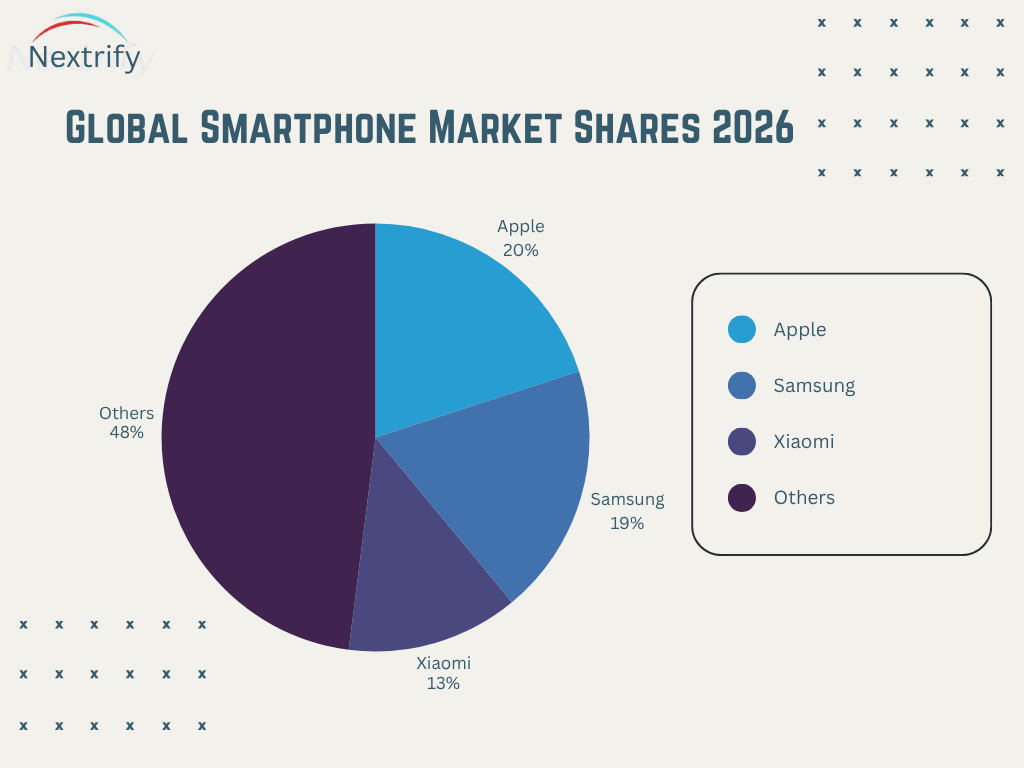
The global smartphone market continues to be dominated by a handful of powerful players, each competing not just on hardware but on entire digital ecosystems. Apple leads with a 20% global market share, closely followed by Samsung at 19%, and Xiaomi holding 13%. Together, Apple and Samsung collectively account for 39% of global phone sales, up from 37% in 2024.
Chinese brands continue their aggressive push globally. Vivo and Xiaomi lead the Indian market at around 18% share each, while Translon has become the undisputed leader across Africa and emerging markets. The race in 2026 is not just about selling phones; it is about locking users into ecosystems they will not want to leave.
Tesla Cell Phone 2026: Hype vs Reality
Few tech rumors have generated as much global excitement as the so-called Tesla Pi Phone. Millions of people search for it every month, but separating fact from fiction is essential. As of April 2026, Tesla has not officially announced any smartphone product. The widely discussed ‘Tesla Pi Phone’ is not a confirmed product; it is a concept created and spread online, amplified by viral videos and clickbait headlines.
| Important: Viral videos claiming a $100 Tesla phone are hoaxes. Elon Musk has expressed reluctance to enter the smartphone market unless forced by app store censorship issues. Tesla’s current Master Plan focuses on automation and Tesla Bots consumer electronics. |
That said, Tesla is already deeply intertwined with smartphones through its vehicles. Its 2025 Holiday Update introduced a ‘Phone Left Behind‘ feature. If the vehicle detects a phone key remaining inside after the driver exits, it emits a distinct chime and displays a warning. A Bluetooth audio prompt and wireless charging pad controls were also added, showing how deeply the phone-to-vehicle relationship has evolved.
If a Tesla phone were ever built, rumored features include deep integration with Starlink satellite internet, passive solar charging, a custom Tesla operating system, and advanced vehicle control capabilities. Some estimates place the price between $800 and $1,500. But until Tesla makes an official announcement, these remain in the realm of speculation.
Starlink Cell Phone Connectivity: A Real Revolution
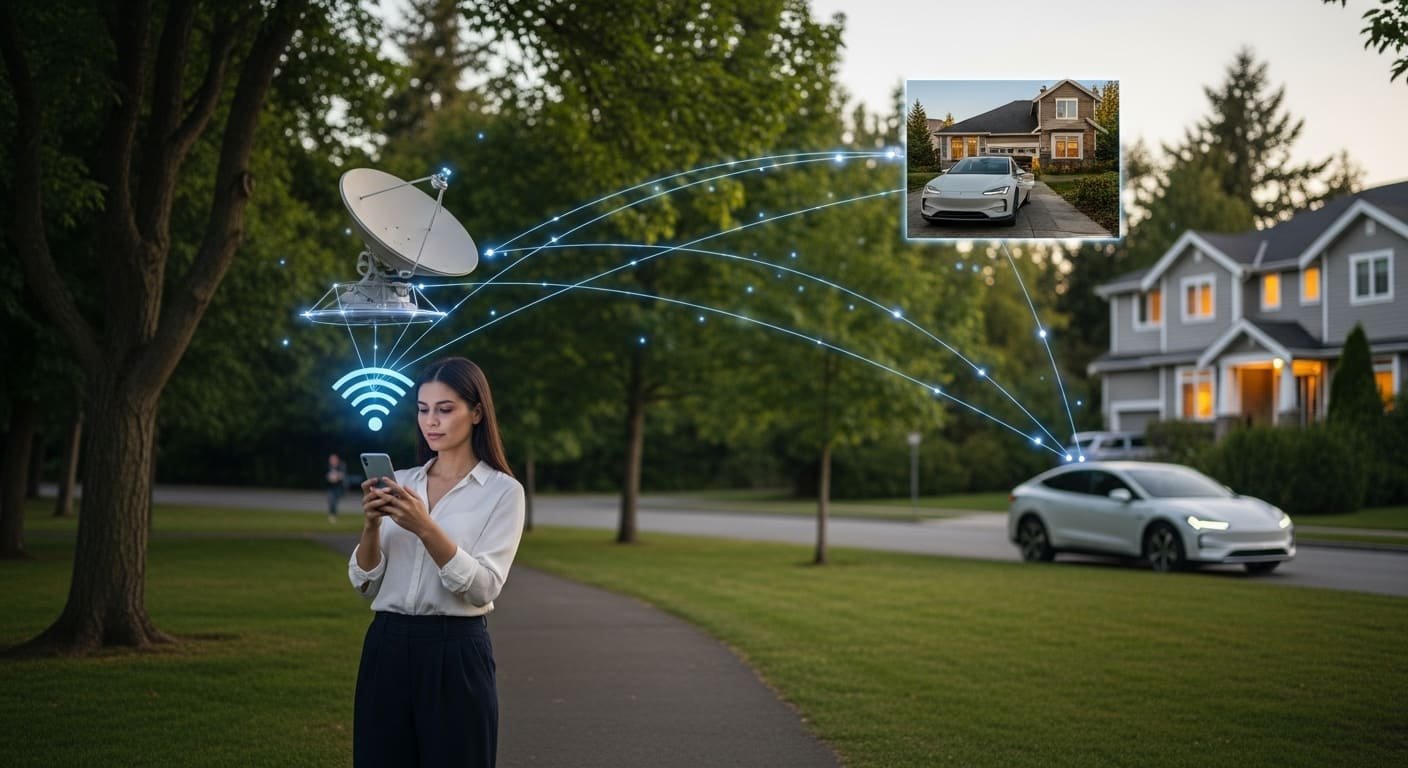
While the Tesla phone remains hypothetical, satellite connectivity for smartphones is very much real, and it represents one of the most significant technological shifts in mobile history. SpaceX, through its Starlink Direct-to-Cell program, has made it possible for standard LTE smartphones to connect directly to satellites orbiting in low Earth orbit, with no special antenna or device modification required.
| As of March 2026, Starlink Mobile has reached 16 million unique users globally, with 10 million active monthly users through partner carriers. SpaceX anticipates exceeding 25 million active users by the end of 2026. |
T-Mobile’s T-Satellite service, launched commercially in July 2025, was the first major carrier deployment. Around 60 compatible phone models are now supported, including most recent Samsung, Motorola, and iPhone models. Users can text, share location, use WhatsApp for voice calls, and even reach emergency services via Text-to-911 — all from areas with zero traditional cell coverage.
Other carriers have followed quickly. AT&T has partnered with AST Space Mobile, which launched satellites providing direct-to-smartphone connectivity using standard LTE and 5G protocols. Verizon integrated Skilo’s satellite network into the Galaxy S25 and Pixel 9, offering satellite-based messaging and location sharing.
The future looks even more transformative. In 2026, SpaceX has begun deploying next-generation Starlink V3 satellites via its Starship rocket, targeting 10x the downlink capacity of current satellites. V3 Direct-to-Cell satellites are expected to deliver full 5G cellular connectivity from space — comparable to terrestrial 5G — with a projected rollout beginning in 2027.
Cell Phone Parts Industry: A Hidden Powerhouse
Behind every smartphone is a vast ecosystem of components, suppliers, and repair specialists that most consumers never see. The mobile phone precision structural parts market is estimated at $50 billion in 2025, projected to grow at a 7% compound annual growth rate through 2033, reaching approximately $85 billion. The smartphone repair market alone is worth $21 billion in 2025, expected to nearly double to $45 billion by 2035.

Several major trends are reshaping the parts landscape. The rise of foldable smartphones — led by Samsung’s Z Fold 7 with its zero-crease display — demands entirely new hinge mechanisms and ultra-thin glass technologies. GaN (Gallium Nitride) chargers are revolutionizing power delivery, enabling faster charging in smaller components. Anker committed $120 million to a Vietnam GaN charger plant in 2025, targeting 15 million units annually.
- Qualcomm’s Snapdragon chips power the majority of Android flagship devices globally
- MediaTek dominates budget and mid-range processor segments across Asia
- Samsung Display produces OLED panels used in iPhones, Galaxy devices, and more
- Sony’s IMX-series camera sensors are the imaging backbone of many flagship phones
- Right-to-repair laws enacted in 15+ countries now cover over 30% of global smartphone users
Top Smartphone Companies & Competitors
The following table covers every major player in the global smartphone ecosystem — from market leaders to satellite connectivity providers — along with their official websites:
| Tier 1 — Global Leaders | ||
| Tier 1 | Apple | 20% global market share. iPhone 17 series, premium ecosystem leader.apple.com |
| Tier 1 | Samsung | 19% global market share. Foldable king, Galaxy AI, OLED display leader.samsung.com |
| Tier 1 | Xiaomi | 13% global market share. Hyperons, Leica cameras, ultra-fast charging.mi.com |
| Tier 2 — Regional Powerhouses | ||
| Tier 2 | OPPO | ~8% global share. Strong across Asia-Pacific markets.oppo.com |
| Tier 2 | Vivo | India & Southeast Asia market leader. Camera-focused devices.vivo.com |
| Tier 2 | Huawei | HarmonyOS, satellite calling. Dominant in the Chinese market.huawei.com |
| Tier 2 | OnePlus | Flagship-level specs at competitive price points.oneplus.com |
| Tier 2 | Realme | Fast-growing budget and mid-range smartphone brand.realme.com |
| Tier 2 | Transsion | Dominant player across Africa and emerging markets.transsion.com |
| Tier 3 — Niche Innovators | ||
| Tier 3 | Google Pixel | Best Android AI experience. Pixel 10 series.store.google.com |
| Tier 3 | Sony | Pro-grade cameras and cinematic video recording.sony.com |
| Tier 3 | Motorola | Affordable 5G devices, strong in North America.motorola.com |
| Tier 3 | Nokia (HMD) | Durable phones with long software update support.hmd.com |
| Tier 3 | Nothing | Unique transparent design with a cult following.nothing. tech |
| Tier 3 | ASUS ROG | Gaming smartphones with top-tier performance.asus.com |
| Satellite & Parts Ecosystem | ||
| Satellite | Starlink (SpaceX) | Direct-to-cell satellite network leader — 650+ satellites deployed.starlink.com |
| Satellite | AST Space Mobile | AT&T’s satellite connectivity partner, direct-to-smartphone.ast-science.com |
| Satellite | Skylon Technologies | Verizon’s NTN satellite partner for Galaxy S25 and Pixel 9.Skylon. tech |
| Satellite | Globalstar | Powers Apple’s Emergency SOS satellite feature.globalstar.com |
| Parts | Qualcomm | Snapdragon chips powering the majority of Android flagships.qualcomm.com |
| Parts | MediaTek | Budget and mid-range mobile processor market leader.mediatek.com |
| Parts | Anker | Leading charging accessories brand, GaN charger pioneer.anker.com |
| Repair | iFixit | Repair parts, tools, and guides for smartphones.ifixit.com |
The Future of Smartphones: Ecosystems Take Over
The biggest transformation in the smartphone industry is unmistakable: it is no longer about individual devices — it is about ecosystems. The phone in your pocket is rapidly becoming the central node connecting your car, your home, your health, your finances, and your digital identity.
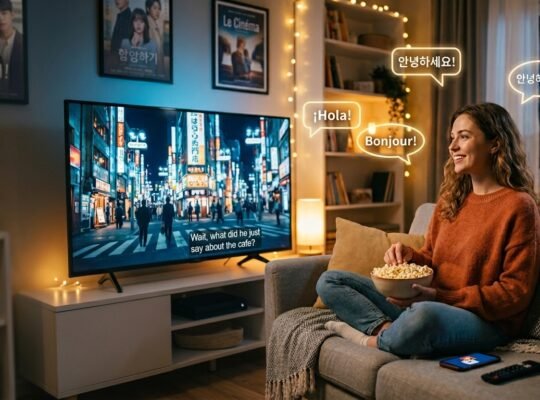
Artificial intelligence has become the defining battleground. Samsung’s Galaxy AI handles real-time voice translation, advanced photo generation, and predictive text entirely on-device, without an internet connection. Google’s Pixel 10 Pro offers what reviewers describe as the most natural AI assistant experience available. Apple continues integrating AI deeply into its entire product suite through Apple Intelligence.
Satellite connectivity is eliminating the last remaining dead zones on Earth. As Starlink V3 satellites begin deployment through 2026 and into 2027, the gap between ‘connected’ and ‘off-grid’ is narrowing faster than most people anticipated. Amazon’s Project Kuiper — its answer to Starlink — is also coming online in 2026, introducing real competition in the low Earth orbit satellite market for the first time.
The smartphone is no longer just a communication device. It is your car key, your satellite terminal, your health monitor, your payment wallet, and your AI assistant. The revolution is not coming, it is already here, accelerating with each passing quarter.
Frequently Asked Questions
No. Tesla has not officially announced any smartphone. The ‘Tesla Pi Phone’ is a popular online concept — not a confirmed product.
Yes. Through T-Mobile’s T-Satellite service, compatible phones can text, share location, and use WhatsApp even in areas with no cell coverage.
Key suppliers include Qualcomm (chips), MediaTek (processors), Samsung Display (OLED screens), Sony (camera sensors), and Anker (charging parts).
AI integration, satellite connectivity, foldable displays, and deeply integrated ecosystems linking phones to cars, smart homes, and health devices.