
Choosing the right cell phone company can feel overwhelming, especially when every carrier promises the “best” network, the lowest prices, and the most perks. The truth? No single company is perfect for everyone.
Whether you’re hunting for the cheapest monthly bill, the widest coverage on road trips, or the hottest cell phone deals, this guide breaks down every major carrier so you can make a confident, informed decision.
Let’s dive in.
What Makes a Cell Phone Company “the Best”?
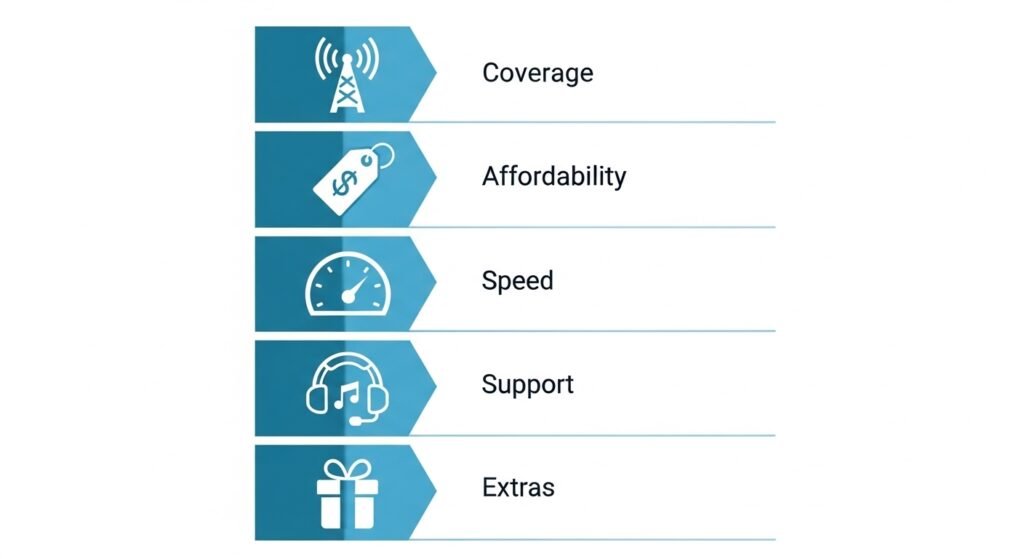
Before comparing carriers, it helps to know what actually matters. The best cell phone provider for you depends on a combination of five key factors:
- Network coverage : Does it reach your home, your commute, your travel destinations?
- Plan pricing : Are there affordable cell phone plans that fit your budget?
- Data speed : How fast is 5G or LTE in your area?
- Customer service : Is help easy to reach when something goes wrong?
- Device deals : Are there good trade-in offers or cheap cell phone promotions running right now?
Keep these in mind as you compare each carrier below.
The Big Three: Verizon, AT&T, and T-Mobile
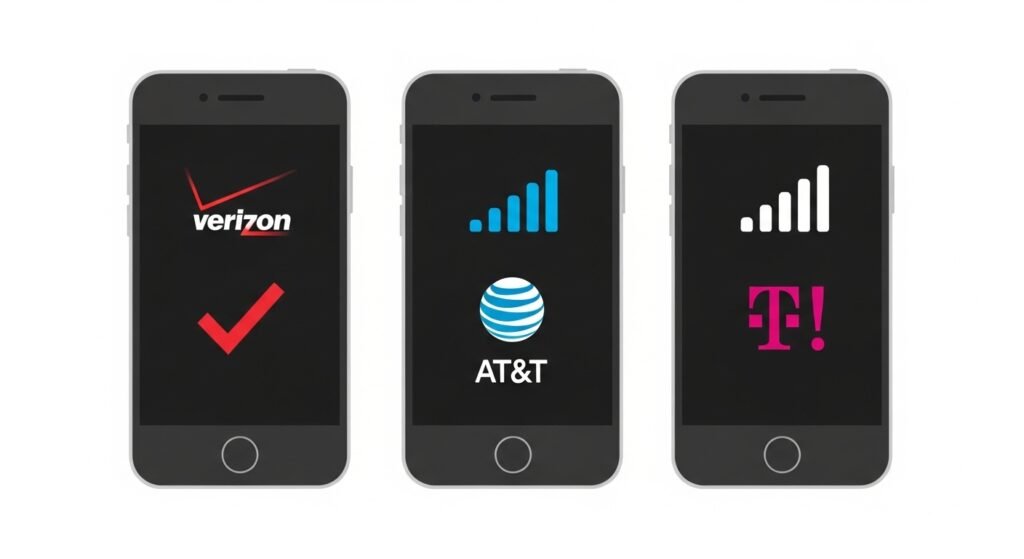
When most people think of major cell phone companies, they think of the “Big Three.” Each has dominated the U.S. market for years and for good reason.
Verizon
Verizon consistently ranks as one of the most reliable networks in the country, particularly for rural and suburban coverage. If you travel frequently outside major cities, Verizon’s extensive LTE and 5G footprint can be a major advantage.
That said, reliability comes at a price. Verizon plans tend to run higher than competitors, so budget shoppers may find better value elsewhere. Where Verizon shines is premium reliability, you’re rarely left searching for a signal.
Best for: Rural users, frequent travelers, and business customers who need dependable coverage above all else.
AT&T
AT&T offers a strong mix of nationwide coverage and competitive pricing, especially for families. Their multi-line discounts make them one of the better choices for households looking to bundle multiple lines without breaking the bank.
AT&T has also expanded its FirstNet network for first responders, and their fiber internet bundles can add extra savings for existing customers.
Best for: Families, bundlers (internet + phone), and mid-tier budget shoppers.
T-Mobile
T-Mobile has emerged as the speed king , especially in cities. After its merger with Sprint, T-Mobile’s 5G network is now the largest in the U.S. by coverage area. Their pricing tends to be more competitive than Verizon and AT&T, and their customer perks (T-Mobile Tuesdays, Netflix on Us) make them popular with younger users.
T-Mobile’s rural coverage, while improving, still lags behind Verizon in some remote areas.
Best for: Urban users, 5G enthusiasts, and value-seekers who want premium features at a lower cost.
Best Cell Phone Deals Right Now
If you’re shopping for the best cell phone deal, timing matters. All three major carriers cycle through promotions , especially around:
- Black Friday and Cyber Monday
- New iPhone and Samsung Galaxy launch seasons
- Back-to-school (August–September)
- Super Bowl and holiday weekends
The strategy: don’t rush. Monitor your preferred carrier’s promotions page for 2–4 weeks before committing.
Pro tip: MVNOs (see below) often run deals too , without requiring a long-term contract.
Affordable Cell Phone Plans: What Are Your Options?
Not everyone needs an unlimited premium plan. Here’s how pricing typically breaks down across the industry:
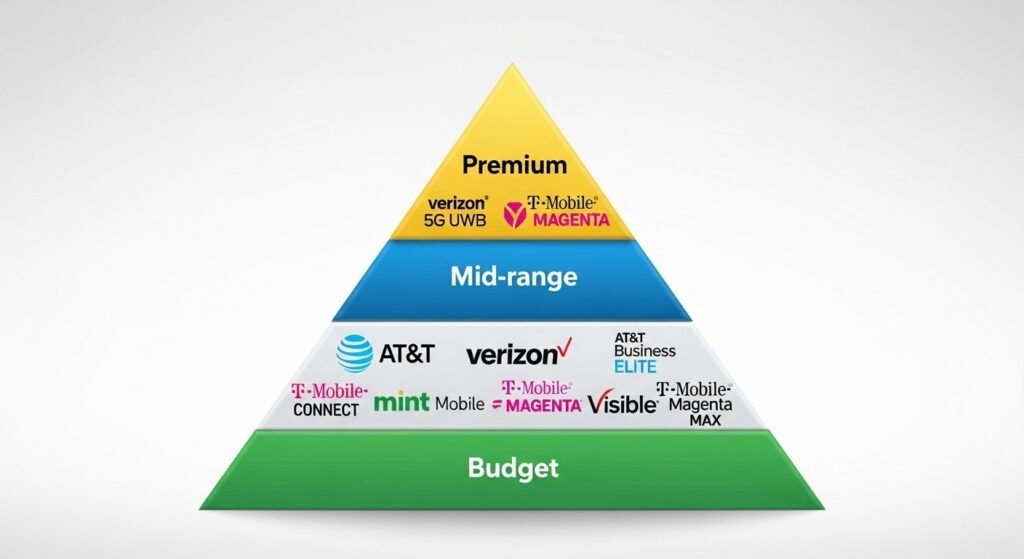
Budget range ($15–$35/month per line):
- Mint Mobile (T-Mobile network)
- Visible (Verizon network)
- Tello Mobile
- Metro by T-Mobile
Mid-range ($40–$60/month per line):
- T-Mobile Essentials
- AT&T Value
- Cricket Wireless (AT&T network)
Premium ($70+/month per line):
- Verizon Unlimited Ultimate
- T-Mobile Go5G Plus
- AT&T Unlimited Premium
The most affordable cell phone plan as of 2026 is offered by carriers like Mint Mobile, which starts around $15/month (on a 12-month prepaid basis), using T-Mobile’s nationwide network. Visible by Verizon starts at $25/month with a single unlimited line.
MVNOs: Hidden Gems for Cheap Cell Phones and Plans
MVNOs ( Mobile Virtual Network Operators ) rent network access from the Big Three and pass the savings on to you. They run on the same towers as the major carriers but charge significantly less.
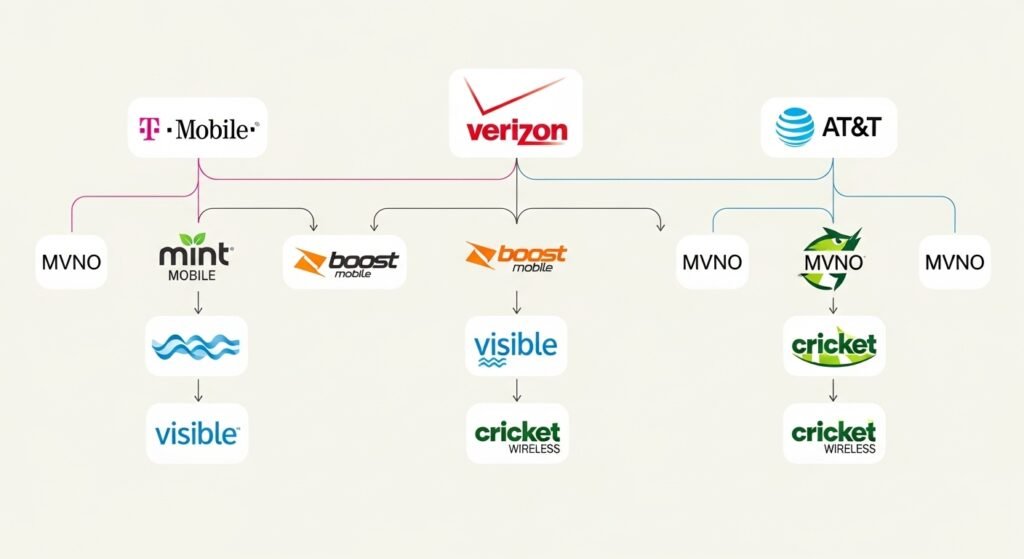
Popular MVNOs worth considering include:
- Mint Mobile : Uses T-Mobile’s network; best for individuals who pay upfront annually
- Visible : Uses Verizon’s network; flat $25/month unlimited
- Cricket Wireless : AT&T’s owned MVNO; strong value for families
- Boost Mobile : Now runs on AT&T’s network after a 2023 transition
- Consumer Cellular : Great for seniors; uses AT&T and T-Mobile networks
MVNOs are ideal if you want cheap cell phones and plans without compromising on coverage quality.
Who Has the Best Cell Phone Coverage?
Coverage is arguably the single most important factor when picking a carrier ; especially if you live outside a major metro area.
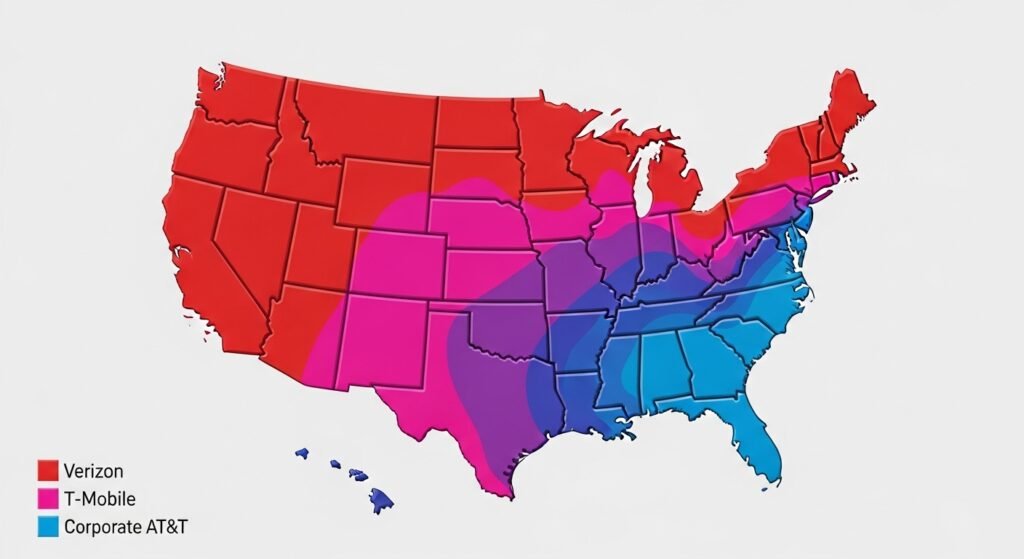
Verizon covers approximately 70% of the U.S. landmass, making it the leader in rural and suburban areas. T-Mobile leads in 5G availability and urban speed. AT&T sits in the middle, with strong performance in the South and Midwest.
How to check coverage before switching:
- Visit each carrier’s official coverage map
- Use RootMetrics or PCMag‘s coverage reports for independent data
- Ask neighbors or coworkers which carrier they use in your area
- Take advantage of free trial SIMs (T-Mobile offers a 30-day trial)
Don’t rely solely on a carrier’s own coverage map , third-party tools give a more honest picture.
Which Cell Phone Company Has the Most Users?
As of 2025, T-Mobile leads the U.S. in postpaid wireless subscribers with over 100 million customers, followed closely by Verizon and AT&T. The competitive gap between the three has narrowed significantly over the past five years.
T-Mobile’s aggressive pricing and 5G expansion have driven significant subscriber growth since its 2020 Sprint merger. However, subscriber count alone doesn’t tell you which provider is best for your specific needs , coverage in your area matters far more.
Where to Buy Cheap Cell Phones
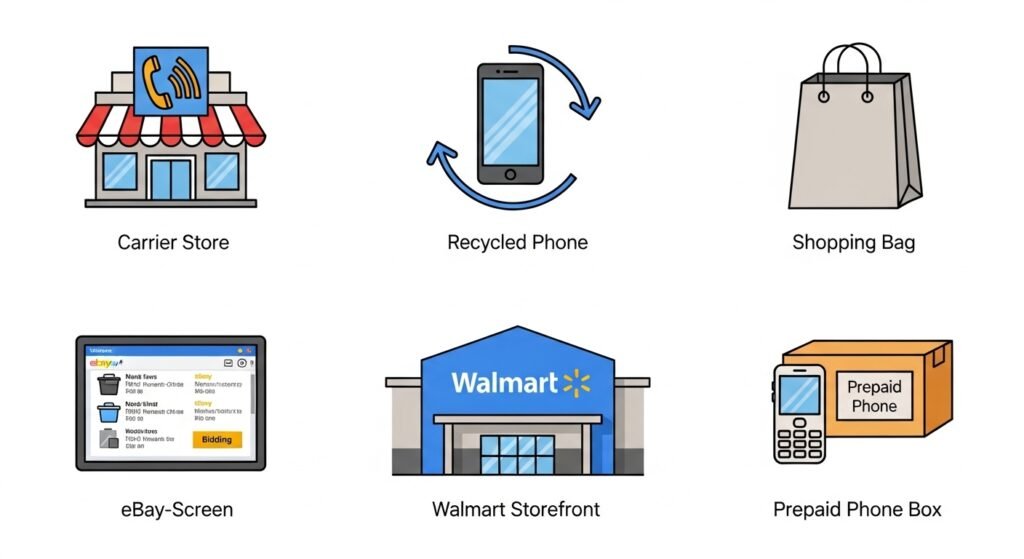
You don’t have to pay full price for a new phone. Here’s where to look:
Through your carrier: Most carriers offer significant discounts when you trade in an older device or sign up for a new unlimited plan. This is the most common route and can knock $400–$1,000 off flagship pricing.
Certified refurbished: Platforms like Apple Certified Refurbished, Samsung’s certified pre-owned store, and Swappa offer reliable devices at steep discounts , often with warranties included.
Retail stores: Best Buy, Walmart, and Costco frequently run exclusive phone deals that aren’t available on the carrier’s own website. Warehouse clubs like Costco also include extra accessories.
Online marketplaces: eBay, Back Market, and Amazon Renewed are solid options for budget buyers, though you should verify the seller’s return policy carefully.
Carrier-specific prepaid phones: If you need an ultra-low-cost option, prepaid Android devices from brands like Motorola and Nokia can be found for under $100 at Walmart and Target.
How to Find Someone by Their Cell Phone Number
While this article focuses on choosing the right cell phone company, it’s worth addressing one common question: how do you look up who owns a phone number?
Legitimate options include:
- Google search : the number directly , public listings often appear
- Whitepages or Spokeo : paid reverse lookup services
- Your carrier’s call filter app : apps like Verizon Call Filter or T-Mobile Scam Shield can identify incoming calls
- Truecaller : a community-powered app that identifies unknown callers
Always use these tools ethically and in compliance with applicable laws. These services are best suited for identifying spam callers or reconnecting with lost contacts.
Head-to-Head Comparison: Big Three at a Glance
| Verizon | AT&T | T-Mobile | |
| Coverage | Best rural | Strong nationwide | Best 5G/urban |
| Cheapest plan | ~$65/mo | ~$50/mo | ~$45/mo |
| 5G availability | Growing | Growing | Largest U.S. 5G |
| Best for | Reliability | Families | Speed + value |
| Contract required | No | No | No |
Before making your final decision, understanding which plan type suits you matters just as much as which carrier you choose
So, Who Is the Best Cell Phone Provider?
Here’s the honest answer: it depends.
- Choose Verizon if reliable rural or suburban coverage is your top priority
- Choose T-Mobile if you want the best 5G speeds and competitive pricing
- Choose AT&T if you’re bundling services or need family plan discounts
- Choose an MVNO (Mint Mobile, Visible, Cricket) if you want the cheapest possible monthly bill
The “best” cell phone provider is the one that works where you live, fits your budget, and meets your usage needs. Take advantage of free trials and comparison tools before making your final decision.
Frequently Asked Questions
What cell phone company has the largest number of users? T-Mobile leads U.S. wireless in postpaid subscribers as of 2025, with over 100 million customers. Verizon and AT&T follow closely behind.
What is the most affordable cell phone plan? Mint Mobile offers plans starting around $15/month (prepaid annually). Visible by Verizon starts at $25/month for unlimited service. Both run on major carrier networks.
Who has the best cell phone deals right now? T-Mobile, Verizon, and AT&T all run rotating trade-in promotions. Check each carrier’s website weekly for current offers, especially during major phone launch events.
Who is the best cell phone provider? T-Mobile leads in 5G coverage and pricing, Verizon leads in rural reliability, and AT&T is strong for families. The best provider depends entirely on your location and usage habits.
Where can I buy cheap cell phones? Options include carrier trade-in deals, certified refurbished programs (Apple, Samsung, Swappa), Walmart prepaid phones, and online marketplaces like Back Market.
Who has the best cell phone coverage? Verizon leads in rural and suburban coverage. T-Mobile leads in 5G availability and urban speed. AT&T provides strong mid-tier coverage across most of the country.
How do I find someone by their cell phone number? Use Google search, Whitepages, or apps like Truecaller for reverse phone lookups. Carrier apps like Verizon Call Filter also help identify unknown callers.
Ready to Switch? Start Here
The best first step is to check coverage in your specific area using independent tools like RootMetrics before committing to any carrier. Then compare plan pricing side-by-side and look for current trade-in promotions.
If you found this guide helpful, explore our related articles on choosing the right cell phone plan for seniors, comparing 5G coverage maps, and how to cut your monthly phone bill in half with an MVNO.
Last updated: 2026. Carrier pricing, coverage, and promotions change frequently ; always verify details directly with the carrier before purchasing.