

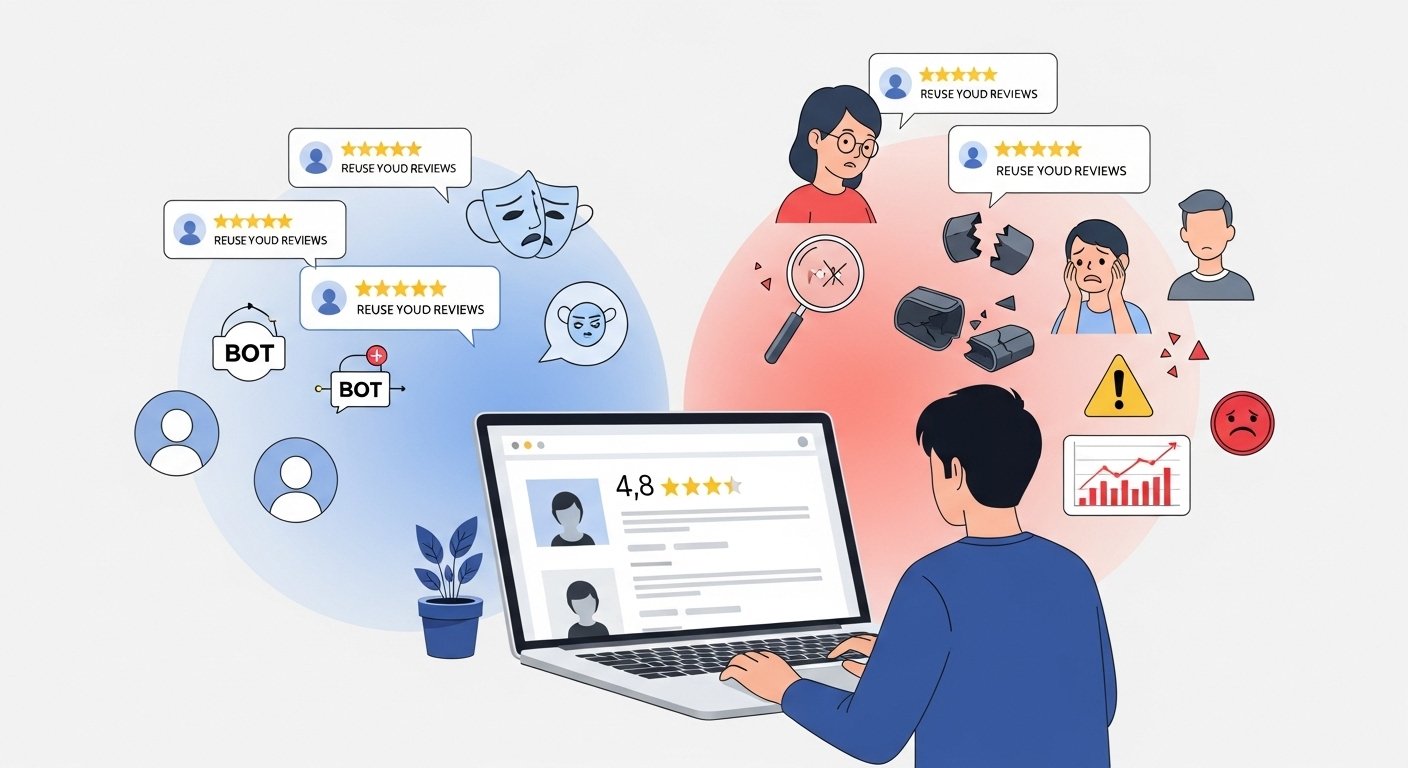
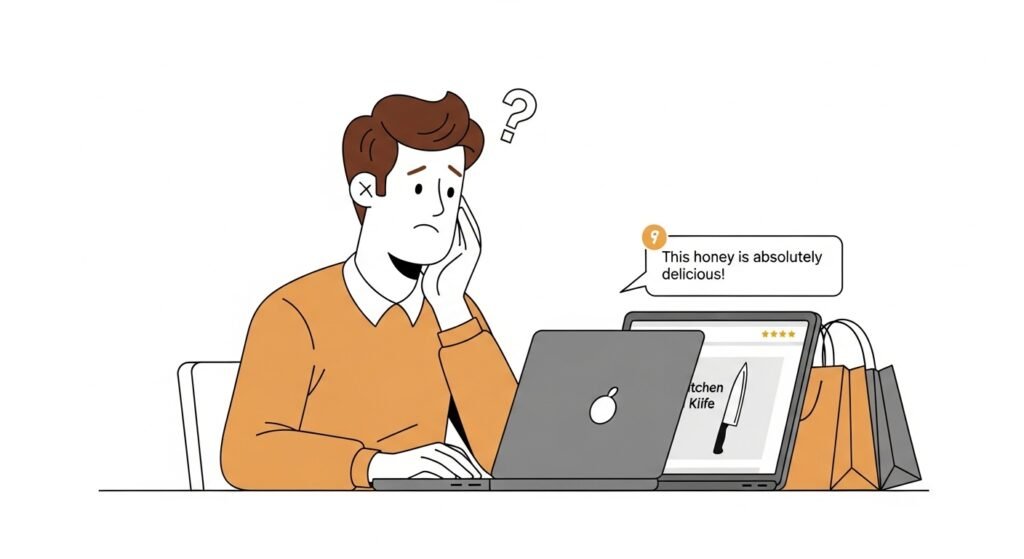
You clicked on a product, read a glowing five-star review, and noticed something strange, the review is about honey. But you’re looking at a kitchen knife. What’s going on?
If you’ve ever spotted a review that seems completely out of place on an Amazon product page, you’re not imagining things and you’re not alone. This is one of the most common (and sneakiest) tricks some sellers use to game Amazon’s review system.
In this guide, you’ll learn exactly why it happens, how to spot it in seconds, and what to do if you’ve already been tricked. No jargon. No fluff. Just practical knowledge that makes you a smarter Amazon shopper starting today.
What you’ll learn
- What “review reuse fraud” is and why sellers do it
- How Amazon’s own listing system
- accidentally makes this worse
- A 7-step checklist to spot mismatched reviews before you buy
- Free tools to check if reviews are real
- What to do if you were already tricked
What Does It Mean When Amazon Reviews Don’t Match the Product?
When you see Amazon reviews that seem to be about a completely different product, a torch, a bottle of honey, a bottle of vodka, appearing on the listing you’re currently viewing, it means the reviews and the product have been “decoupled.” The reviews were left by real people, but for something entirely different from what you’re buying.
This can happen in a few different ways, and understanding which one you’re dealing with tells you a lot about how much you can trust that listing.
What is “Review Reuse Fraud”?
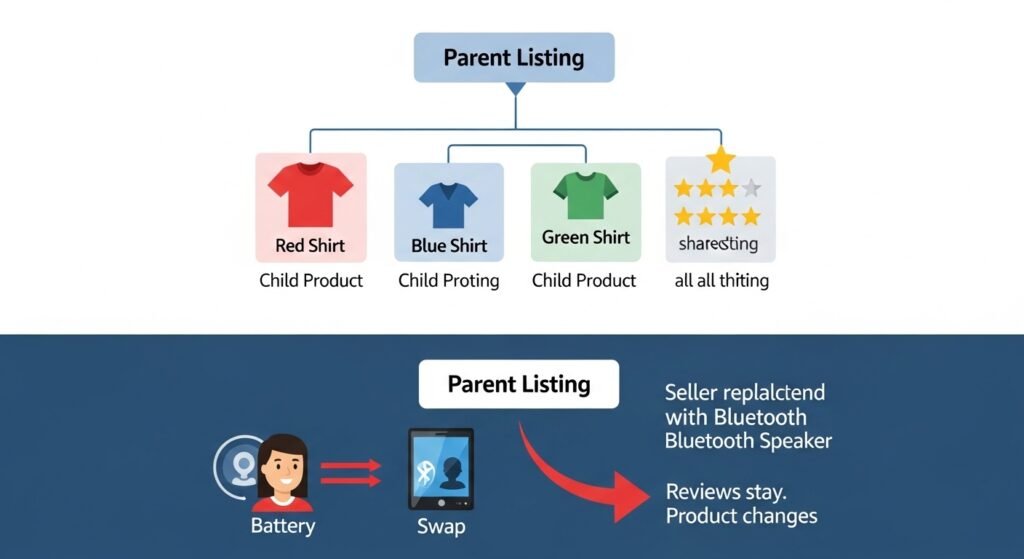
Review reuse fraud is a deliberate tactic where a seller replaces the product on an existing Amazon listing, swapping out the photos, title, and description, while keeping all the old customer reviews. The goal is to make a brand-new or low-quality product appear highly trusted by inheriting someone else’s hard-earned ratings. This violates Amazon’s Terms of Service, and the FTC considers it a form of consumer deception.
How Amazon’s Listing System Makes This Possible
To understand why this problem exists, you need to know a little about how Amazon organizes products. Amazon groups related items under a single “parent” listing. So a shirt that comes in red, blue, and green might all live on the same page, each color is what Amazon calls a “child” variation.
All of those child variations share the same review pool. Reviews left for the red shirt count toward the blue shirt’s rating too. Amazon designed this to make shopping simpler. But it created an opening that dishonest sellers quickly learned to exploit.
When a seller gains control of one of these parent listings, or simply owns an old listing that was once popular, they can quietly swap in a completely new product. All the old reviews stay right where they are. The new product inherits a 4.5-star rating with thousands of reviews overnight, even though none of those reviewers ever touched it.
Why sellers do this
On Amazon, a high star rating means everything. Products with 4+ stars rank higher in search results, earn Amazon’s Choice labels, and convert far more buyers. Starting from zero reviews puts new sellers at a huge disadvantage, so some choose to cheat instead of compete.
The 3 Main Reasons Amazon Reviews Don’t Match
Reason 1: A Seller Swapped the Product (Review Reuse Fraud)
This is the most common and most intentional cause. A seller deliberately replaces what they’re selling on an existing listing with a completely different product. The photos change. The title changes. The description changes. The reviews don’t. Sometimes a single listing has been used to sell half a dozen different products over the years
Reason 2: Amazon Grouped Multiple Products Together
Even Amazon itself has done this unintentionally. Over a dozen marble kitchen items, pastry boards, utensil holders, rolling pins, have been grouped under a single listing. A buyer scanning the page sees 3,000+ reviews, but reviews for the rolling pin are counted alongside reviews for a cheese knife. This isn’t always fraud, but it still misleads buyers about the specific item they’re viewing.
Reason 3: The Product Changed Over Time
Sometimes a listing evolves legitimately. A product gets updated, new materials, a new formula, a different design. Old reviews from two or three years ago reflect a product that may no longer exist. The company hasn’t necessarily done anything wrong, but the older reviews can paint an inaccurate picture of what you’d receive today.
Real-World Examples Caught in the Wild
These aren’t hypothetical scenarios. Investigative reporting by BuzzFeed News uncovered striking examples worth knowing about:
The ZeroLemon Speaker: Buyers who purchased a smartphone battery in 2014 later discovered their five-star review was appearing on a Bluetooth speaker listing. The seller had switched the product but kept all the reviews. The listing had over 2,100 reviews, almost all about the battery.
The AsaVea Hair Straightener: One listing had been used to sell an SPF lotion (2006), a deodorant (2010), a face scrub (2012), mascara (2018), and finally a hair-styling tool, all under the same URL, all inheriting the same review history.
The iPhone Charging Dock: The top customer review on a charging dock was a 2016 comment about a culinary torch. “Great for making the perfect dish!” it read, complete with a photo of the torch. If you’re shopping for a phone accessory or looking for the best camera phone in 2026, always verify the review history first.
Electric Can Openers: A journalist found that most five-star reviews on top-rated can opener listings were for measuring cups, boxes of chocolates, and tins of other products, not a single can opener review in sight.
The FTC’s position The FTC has been explicit: “It’s deceptive to misrepresent that reviews for one product apply to a different product.” Review recycling is treated as consumer fraud under the FTC Act, the same legal standard applied to other forms of commercial deception.
Is This Against the Rules? What Amazon and the FTC Say
Yes, clearly and explicitly. Amazon’s Terms of Service prohibit changing a product’s fundamental nature on an existing listing to retain its reviews. Sellers caught doing this face account suspension, loss of selling privileges, withheld funds, and in serious cases, legal action.
Amazon has invested in machine learning systems to detect unusual review patterns, sudden spikes, coordinated timing, flagged seller behavior. But the sheer volume of Amazon’s marketplace means some fraud slips through, sometimes for months or years before it’s addressed.
The New Layer: AI-Generated Reviews (2026 Update)
There’s a newer problem layered on top of the mismatched review issue, and it’s growing fast. Since ChatGPT launched in late 2022, AI-generated content in Amazon reviews has increased by approximately 400%, according to a study by Originality.ai that analyzed over 26,000 product reviews. AI-generated reviews are different from mismatched reviews, but they often appear on the same problematic listings. Here’s what they look like:
Generic enthusiasm with no specifics: “This is by far the best purchase I’ve made”, with no explanation of why.
Suspiciously uniform phrasing: Multiple reviews using nearly identical sentence structures across different accounts. No personal context: Real reviewers say when they bought something, how they used it, and for what. AI reviews stay vague.
Zero downsides mentioned: Genuine reviews almost always note at least one limitation. AI five-star reviews rarely do.
How to Spot Mismatched Reviews Before You Buy: A 7-Step Checklist
Here’s a quick routine you can run on any Amazon listing in under two minutes before making a purchase decision.
Before-You-Buy Review Checklist
Sort by Most Recent: Click “Most Recent” in the review sort options. Old reviews may describe an older version, or a completely different product.
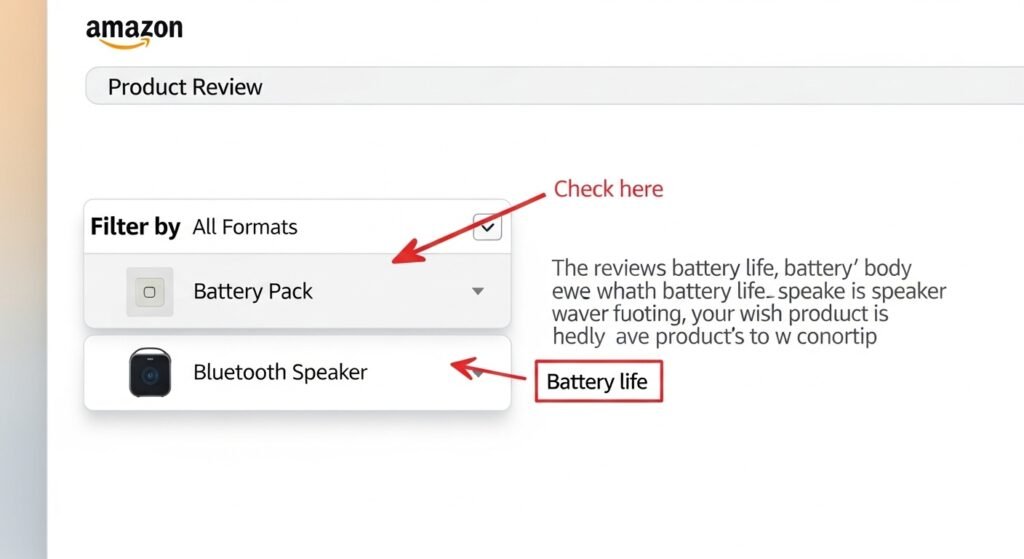
Check the “All Formats” dropdown: In the review filter section, open “All Formats.” If you see multiple product names in the list, this listing has reviews from multiple product histories.
Read the top review’s body text : Don’t just scan the star rating. Read what the top reviewer actually describes. If they mention something completely different from what you’re buying, that’s a red flag
Look at reviewer photos: Photos attached to reviews are the easiest way to spot a mismatch, a photo of a different product is undeniable evidence of review swapping.
Check the Verified Purchase ratio: A high proportion of “Verified Purchase” reviews is a positive signal. A listing where most reviews are unverified is a significant warning.
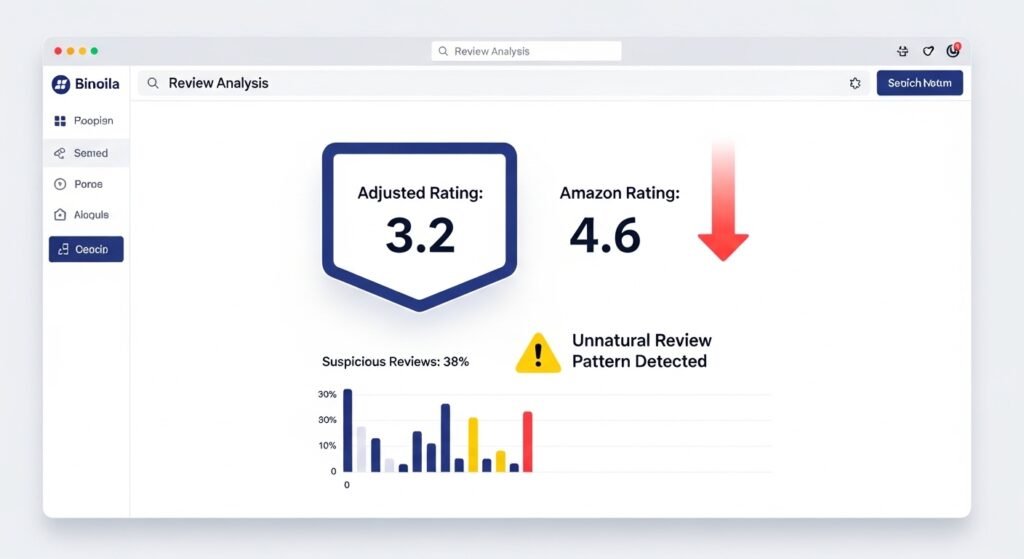
Use Review Meta or Keepa: Paste the Amazon URL into ReviewMeta for an adjusted rating that filters suspicious reviews. Keep a track listing history and can reveal product swaps. This step is especially critical for high-ticket purchases like laptops — where a bad buy is expensive to return.
Search the product name on Google. Type the product name + “reviews” into Google. Independent review sites, Reddit threads, and YouTube videos often tell the real story of a product.
Free Tools to Check if Amazon Reviews Are Real
You don’t have to do all of this manually. Several free tools handle the heavy lifting for you.
Tracks price history and listing changes over time. Excellent for spotting product swap, sudden changes in product category or a drastic price shift show clearly in the chart. This is especially useful when researching electronics like laptops or cell phones before buying.
Compara AI
A browser extension that filters fake and biased reviews in real time as you browse Amazon, showing a cleaner, more trustworthy rating without leaving the page.
Amazon’s “Verified Purchase” Filter
Built right into Amazon. Under “Filter by” in reviews, enable “Verified Purchase” to hide unverified reviews, a solid first filter against fake feedback.
What to Do If You Were Already Tricked by Mismatched Reviews
It happens to the best of us. If you bought something based on reviews that turned out to be for a different product, here’s exactly what to do.
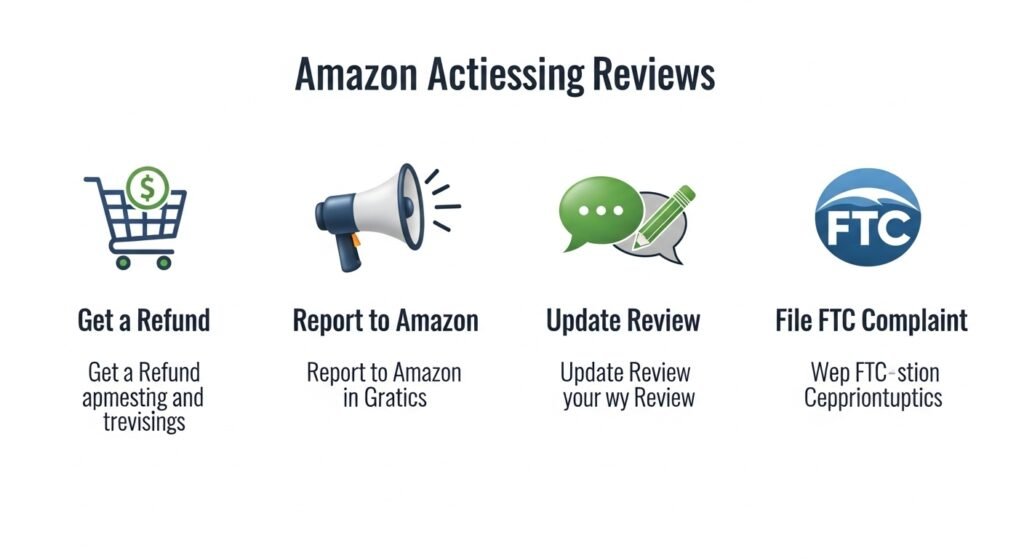
Request a refund through the Amazon A-to-Z Guarantee. Go to your Orders page, select the item, and choose “Problem with order.” Misrepresented products qualify for a full refund under Amazon’s buyer protection. Act quickly, there are time limits on claims. Overheating complaints are one of the most common signs of a misrepresented laptop — learn how to spot and fix that in our laptop overheating guide.
Report the listing to Amazon.On the product page, find the “Report incorrect product information” link or use “Report abuse” on specific reviews. Amazon investigates flagged listings and takes action against repeat offenders.
Update your own review.If you left a positive review and the product has since been swapped, you have every right to edit or delete it. You are not obligated to keep promoting a product you never actually reviewed.
File a complaint with the FTC. Visit ReportFraud.ftc.gov. Individual reports contribute to pattern tracking that enables federal investigations into repeat bad actors.
Mismatched Reviews vs. Fake Reviews vs. AI Reviews: What’s the Difference?
Beginners often confuse these three types of review problems. They’re related but distinct and knowing the difference helps you spot each one faster.
| Type | What It is | How to Spot It | Detection Difficulty |
| Mismatched Reviews | Real reviews for a completely different product appearing on the current listing | Reviews mention different products, attach wrong photos, or reference that don’t match | Easy once you know to look |
| Fake (Paid) Reviews | Reviews written by people paid to praise a product that may never have used | Unverified purchases, sudden review spikes, identical phrasing, across accounts | Moderate, use Review Meta |
| AI-Generated Reviews | Reviews written by AI tools like CHATGPT on behalf of real or fake accounts | Generic enthusiasm, no personal details, uniform praising, no downsides mentioned | Hard, AI mimics human writing well |
| Incentivized Reviews | Reviews left by people who received the product free or a gift card in exchange | Disclosure language ( “received to review…”), often overly positive tone | Even if disclosed, invisible if hidden |
Frequently Asked Questions
This usually happens because a seller has swapped the product on an existing listing, keeping all the old reviews but replacing the item being sold. Amazon’s system also groups product variations together, which can cause reviews for one item to appear on a related but different product.
It violates Amazon’s Terms of Service and can result in account suspension or a permanent ban. The FTC also considers misrepresenting that reviews for one product apply to another to be deceptive under the FTC Act, so it can carry legal consequences beyond Amazon’s own enforcement.
Sort reviews by “Most Recent” and read the actual content. Use the “All Formats” dropdown to see if reviews reference multiple product names. Check that reviewer photos actually show the product you’re buying. Tools like ReviewMeta.com can also flag suspicious patterns automatically.
Review reuse fraud is when a seller takes an existing Amazon listing with positive reviews and replaces the product being sold with a completely different item. The old reviews remain on the listing, misleading buyers into thinking the new product has been thoroughly reviewed when it hasn’t.
Not automatically. A high review count alone is not a reliable quality signal. Always check: when were most reviews left? Do recent reviews match the current product? Is the verified purchase ratio high? A product with 200 specific, recent, verified reviews is often more trustworthy than one with 5,000 old, vague ones.
ReviewMeta.com is one of the most reliable free options. Paste any Amazon product URL and it produces an adjusted rating by stripping out reviews it identifies as suspicious. Keepa is also excellent for checking listing history to detect product swaps over time.
First, request a refund through Amazon’s A-to-Z Guarantee from your Orders page, misrepresented products are covered. Next, report the listing using the “Report incorrect product information” link on the product page. You can also file a complaint with the FTC at ReportFraud.ftc.gov, which helps investigators track repeat offenders.
“Verified Purchase” confirms a real order was placed through that account, but it doesn’t guarantee the review is about the current product. If a listing was swapped after old reviews were left, those older verified reviews still carry the badge, even though they’re no longer relevant to what’s being sold today.
The Bottom Line
Amazon reviews are a powerful tool, but only if you know how to read them critically. Review reuse fraud, product swaps, and AI-generated feedback have made raw star ratings less reliable than they once were. The good news is that the signs are usually visible once you know what to look for.
Spend 60 seconds checking recent reviews, glancing at reviewer photos, and filtering by Verified Purchase before committing to any purchase. For bigger buys, run the listing through ReviewMeta first. For bigger buys like laptops or cell phone plans, run the listing through ReviewMeta first and always research independently. It takes almost no time and can save you from a frustrating experience.
Quick takeaway
Bookmark the 7-step checklist in this article. The next time a product’s star rating feels too good to be true, run through it before you buy. A few seconds of checking could save you a return, a refund battle, and a lot of frustration.
Have you ever spotted a mismatched review on Amazon? Share this article with someone who shops online, it might save them from a bad purchase.
